The thinking behind Leadership Constraints
Leadership Constraints emerged from a question that became increasingly difficult for me to ignore.
Across many years of assessing, coaching and developing leaders, I repeatedly encountered highly capable people whose next stage of development could not be adequately explained by asking what capability they still lacked.
They were experienced.
They had demonstrated considerable ability.
Many had already received substantial leadership development.
And they were often performing successfully.
Yet there remained a difference between the capability they appeared to possess and the extent to which that capability was being expressed through wider influence, progression and organisational impact.
The more closely I looked, the more certain patterns began to repeat.
Those patterns became the Leadership Constraints.
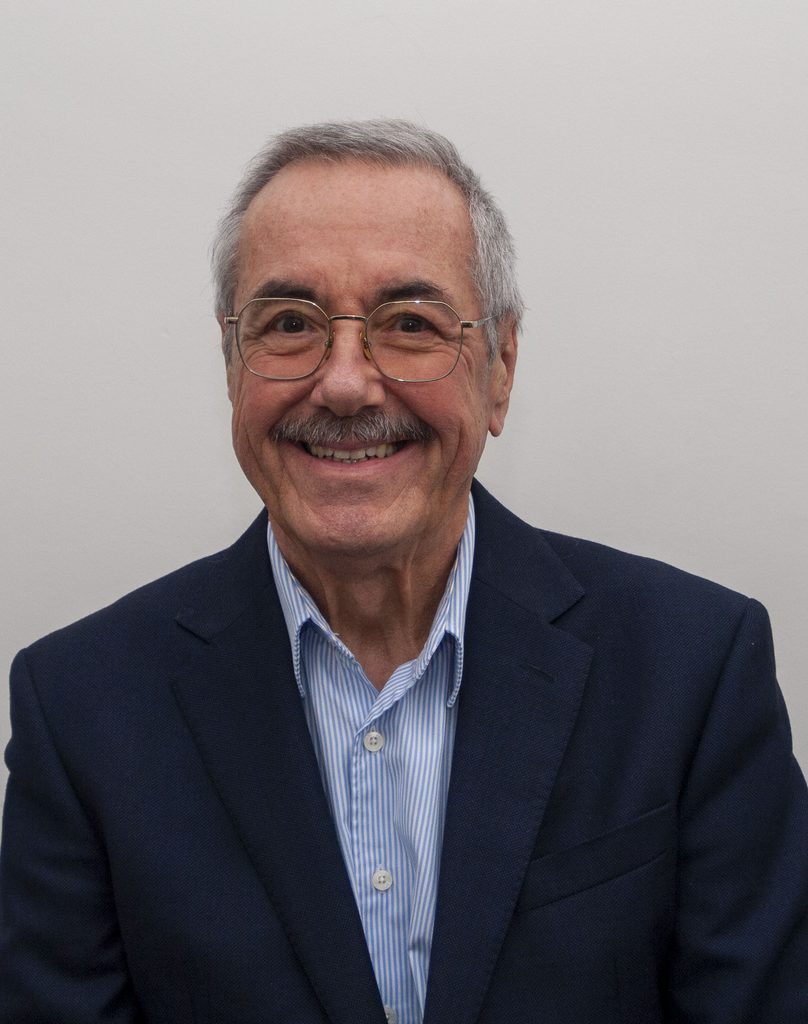
A career at the intersection of psychology and organisations
I am a Chartered Occupational Psychologist, executive coach and leadership assessment and development specialist.
Before concentrating on psychology, assessment and coaching, I held senior corporate HR responsibilities, including at Group HR Director level.
That combination has shaped how I approach leadership development.
Psychology helps us understand the individual.
Organisational experience reminds us that the individual never operates in isolation.
Leaders work within structures, cultures, relationships, expectations, pressures and systems. Their behaviour is influenced not only by who they are, but by what the organisation rewards, requires and reinforces.
Leadership development therefore needs to understand both.
The person and the environment in which that person is expected to lead.
This perspective sits at the heart of Leadership Constraints.
From assessment to development
A substantial part of my professional work has involved leadership assessment.
Assessment asks an important question:
What capability does this person demonstrate?
Executive coaching often begins somewhere different:
What is helping or preventing this person from making fuller use of that capability?
Working across both disciplines made the distinction increasingly important.
I encountered leaders who assessed strongly but did not always position themselves with equivalent confidence.
Leaders whose contribution was substantial but insufficiently visible.
Highly experienced people who remained more immersed in delivery than their level of responsibility required.
Executives whose experience strengthened judgement but could also make familiar interpretations harder to challenge.
And resilient people who had moved beyond difficult experiences without necessarily leaving all of their influence behind.
Leadership Constraints grew from trying to understand these differences more precisely.
From corporate leadership to executive coaching
My earlier corporate career provides another important part of that perspective.
Having worked at senior HR leadership level, I understand leadership development not only from the position of the psychologist or coach, but from the organisational side of the table.
Organisations need leaders who can translate capability into results.
They need succession decisions that stand up to scrutiny.
They need development investment to make a difference beyond the development event itself.
And they need leadership behaviour to work within the realities of organisational life.
This has encouraged me to remain interested not simply in insight, but in application.
What changes?
What becomes possible?
What difference does development make to the individual and to the organisation?
Those questions continue to shape both my coaching practice and the development of Leadership Constraints.
Working with leaders
My work spans executive coaching, leadership assessment, development centres, senior talent programmes and leadership development.
I have worked with senior executives, experienced leaders and emerging leadership talent across government and major commercial organisations, with particularly extensive experience in the Middle East and the UAE.
The contexts vary considerably.
The recurring objective is to help capable people understand themselves more clearly and translate that understanding into greater effectiveness and impact.
Leadership Constraints provides an additional lens through which to do that.
Professional background
My professional credentials include:
Chartered Occupational Psychologist
HCPC Registered Practitioner Psychologist
Chartered Scientist
Chartered Fellow, Chartered Institute of Personnel and Development
Associate Fellow, British Psychological Society
Fellow, Association for Coaching
My academic qualifications include an MSc and PhD from the University of Bath.
Talent Management Global
I founded Talent Management Global (TMG) in 2018 to provide specialist leadership assessment, leadership development, executive coaching and consultancy services to organisations.
Leadership Constraints has emerged from this wider professional practice, bringing a more focused perspective to understanding why capable leaders do not always realise their full potential.
The two are complementary. TMG provides the broader professional services, while Leadership Constraints concentrates on identifying and addressing the behavioural patterns that can limit leadership effectiveness and continued growth.
Why Leadership Constraints?
There is no shortage of leadership models. A new framework therefore needs to answer an obvious question:
What does this add?
Leadership Constraints does not seek to replace established approaches to leadership development. It addresses a different part of the development equation.
Competency frameworks help identify the capabilities leaders require. Assessment provides evidence of the capabilities they currently demonstrate. Psychometrics deepen our understanding of individual characteristics and behavioural tendencies, while coaching helps leaders translate insight into change.
Leadership Constraints explores what may happen between possessing capability and fully expressing it. Its particular contribution is to identify the behavioural patterns that can prevent otherwise capable leaders from achieving their full potential.
Importantly, the framework emerged from practice rather than from creating six categories and searching for people who fitted them.
Recurring observations from leadership assessment, executive coaching and development came first. These patterns were progressively examined, differentiated and refined, drawing upon real leadership journeys to distinguish apparently similar behaviours with different underlying causes.
The framework continues to evolve through application, evidence and reflection. This is important because leadership models should help us understand the complexity of real people, rather than requiring people to fit the convenience of a model.
Why Capable Leaders Sometimes Stop Growing
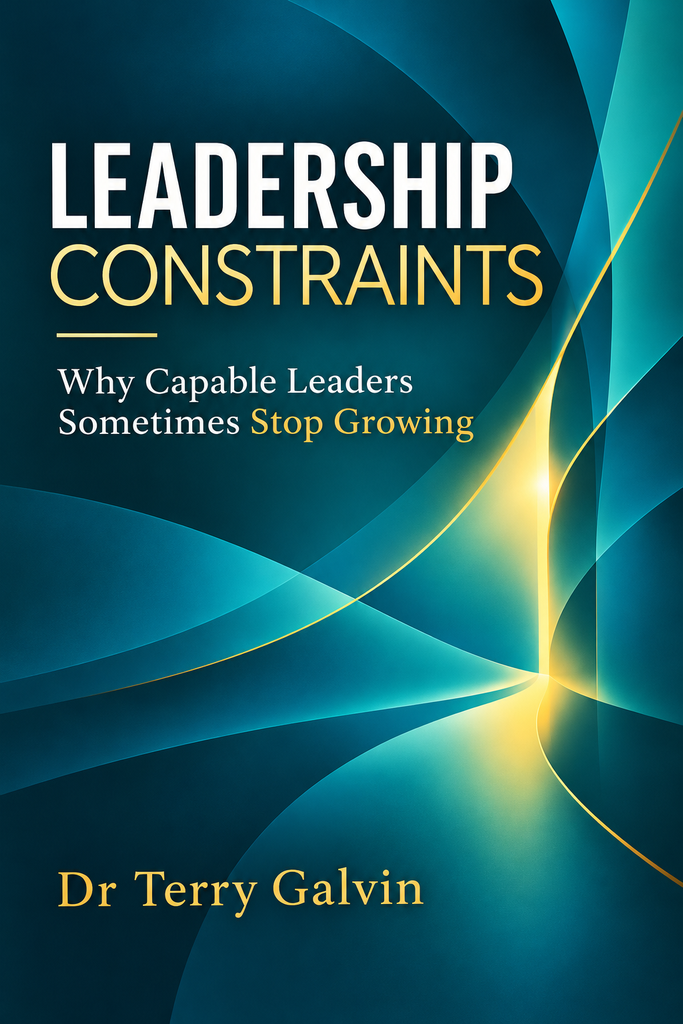
Leadership Constraints is also the subject of my forthcoming book:
Leadership Constraints: Why Capable Leaders Sometimes Stop Growing
The book explores the six Constraints through leadership psychology, organisational experience and anonymised leadership journeys. It examines how each Constraint can develop, how it may be reinforced and how its influence can be reduced.
At its heart is a proposition that has increasingly shaped my professional work:
Sometimes development requires adding capability.
Sometimes it requires releasing more of the capability already there.
The challenge is knowing which.
This thinking continues to develop through practical application with individual leaders and organisations. The framework is being used to deepen coaching conversations, sharpen development priorities and explore the organisational conditions that can either enable or constrain leadership effectiveness.
The underlying purpose remains straightforward: to help capable leaders express more of what they already possess, while enabling organisations to realise more of the leadership capability already available to them.
Start a conversation
If the Leadership Constraints perspective connects with something you are seeing in your own development, in someone you lead or across your organisation, I would be pleased to explore it with you.
Or continue exploring: